
Winter vs all-season vs all-weather tires
By LSG Auto Nation ·
Short answer
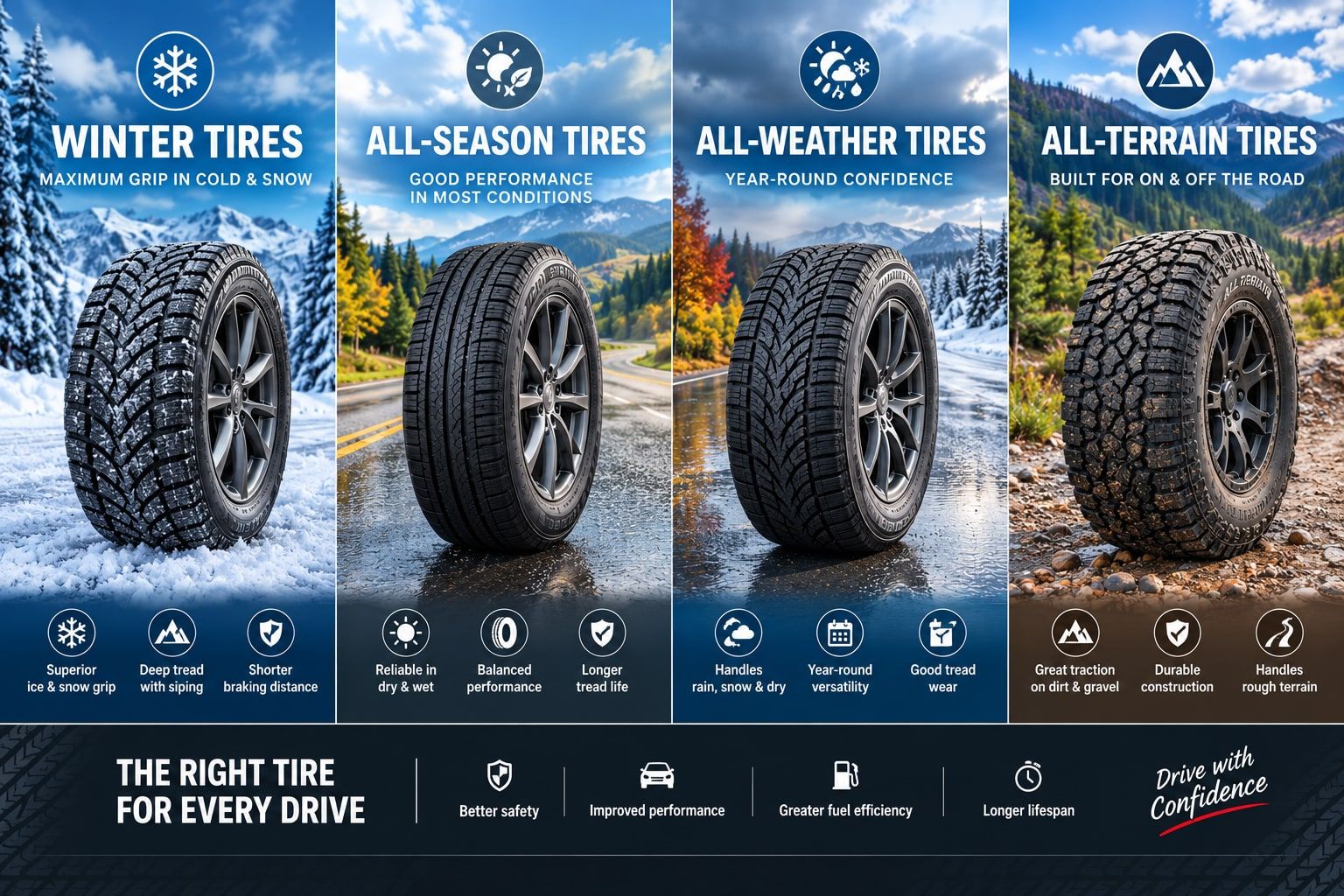
Winter tires grip best on snow, ice and cold roads. All-season tires suit mild winters and town driving. All-weather tires carry the snowflake-on-a-mountain symbol and can stay on all year. If you drive BC highways or mountain passes in winter, winter tires are the safest choice.
| Tire type | Best for | Winter grip | Swap twice a year? |
|---|---|---|---|
| Winter | Snow, ice, mountain passes, cold below about 7°C | Best | Yes |
| All-weather | Year-round driving with moderate winters | Good | No |
| All-season | Mild winters and mostly town driving | Limited | No |
How to tell them apart
Look on the side of the tire. Winter and all-weather tires have the snowflake-on-a-mountain symbol. Many all-season tires only show M+S (mud and snow), which is legal on BC highways but grips much less on ice.
Which should I choose?
- You drive the Coquihalla or other passes in winter: winter tires.
- You mostly drive in town and want one set all year: all-weather tires.
- Winters where you drive are mild: all-season tires can be enough.
Whichever you choose, BC highway rules from October 1 to March 31 require at least 3.5 mm of tread. See when to put winter tires on in Kamloops.