
Check-engine light on: what it means and what to do
By LSG Auto Nation · · Updated
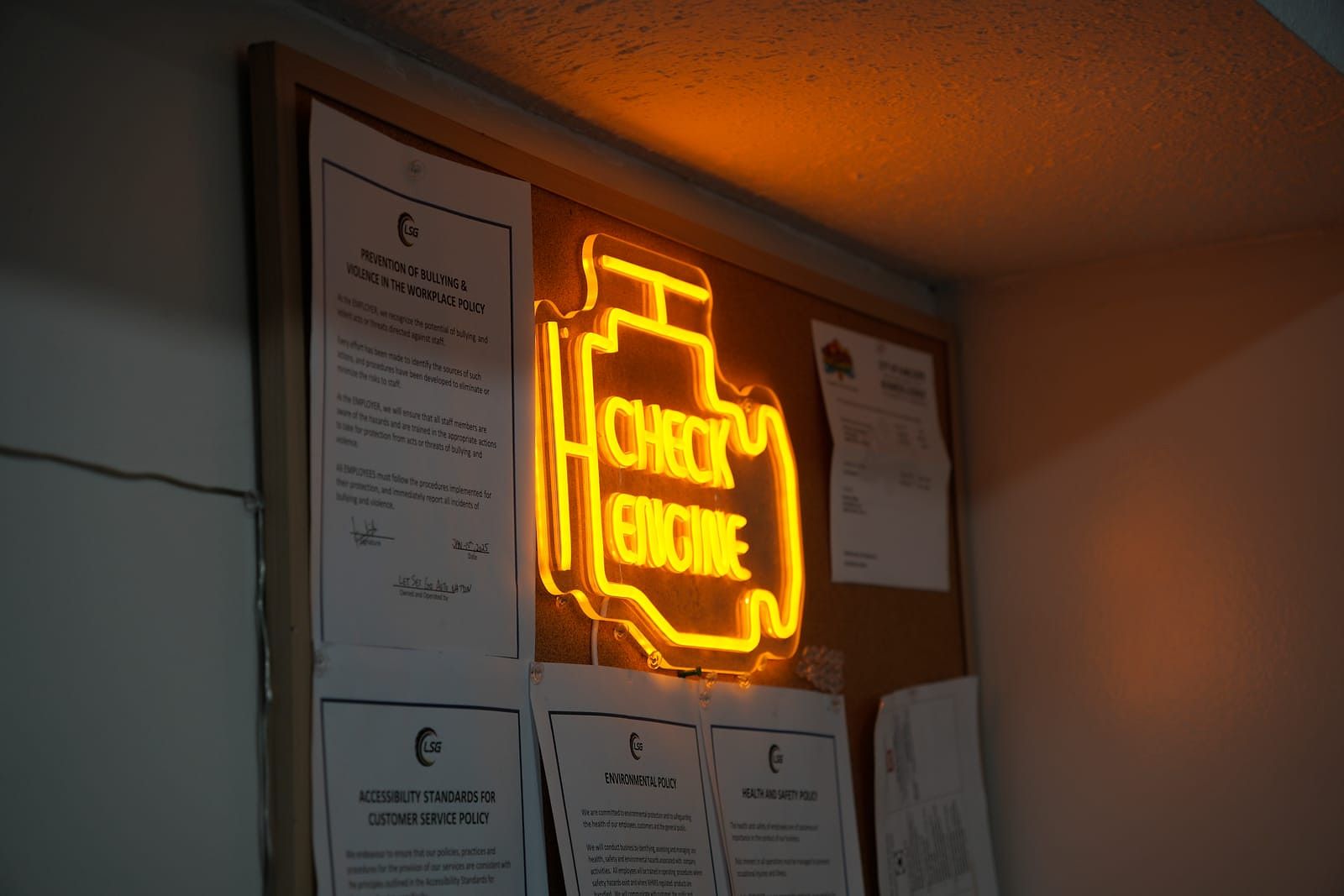
Short answer
A steady check-engine light means your car's computer has found a problem with the engine or exhaust. You can usually keep driving for a short time, but get it checked soon. A flashing light is more serious. It usually means the engine is misfiring, which can damage expensive parts, so slow down and stop as soon as it's safe.
The check-engine light means your car’s computer has noticed something wrong and saved a code for it. The light doesn’t tell you what’s wrong, only that something in the engine, fuel or exhaust system needs a look.
Steady or flashing: what’s the difference?
| What you see | What it usually means | What to do |
|---|---|---|
| Steady light, car drives normally | The computer has saved a problem | Book a check soon |
| Steady light, engine runs rough | The problem is affecting how the engine runs | Drive gently and get it checked right away |
| Flashing light | The engine is misfiring | Slow down and stop as soon as it’s safe |
A flashing light is the one not to ignore. When an engine misfires, unburned fuel goes into the exhaust and can overheat the catalytic converter, an expensive part that cleans your exhaust. A small repair can quickly become a big one.
What are the most common causes?
- A loose or worn gas cap. Fuel vapour escapes, and the car notices.
- An oxygen sensor. It checks the exhaust, and a failing one can quietly waste gas.
- Spark plugs or ignition coils. These make the spark that burns the fuel. Worn ones cause misfires, and a tune-up replaces them.
- The catalytic converter. It usually fails because of another problem, such as a misfire that was left too long.
- The airflow sensor. It measures the air going into the engine. A dirty one can make the car hesitate and use more gas.
- A cracked hose or seal. This is common on older cars.
Is it safe to keep driving?
If the light is steady and the car drives normally, you can usually keep driving for a short time. Book a check soon, because small problems can waste gas or damage other parts. If the light is flashing, pull over when it’s safe and call for help. Do the same if you notice a loss of power, overheating, or a smell of fuel or burning.
What happens during a diagnostic check?
- We plug a scanner into your car and read the codes its computer has saved.
- We look at live readings from the car’s sensors, to see what was happening when the problem was saved.
- We test the part the code points to, so we fix the real cause instead of guessing.
- We explain what we found and give you a price before any repair.
That’s the difference between just reading a code and properly diagnosing a check-engine light. A code points to an area of the car. Testing finds the part.